
Building AI That Sees and Serves India – HRTI

When machines learn to see, they don’t just process pixels—they begin to decode the world. But for artificial intelligence to truly serve the nation, its visual understanding must reflect the country’s unique terrain, varied infrastructure, and distinct environmental realities.
At IIT Bombay, a powerful new initiative is turning this vision into reality.
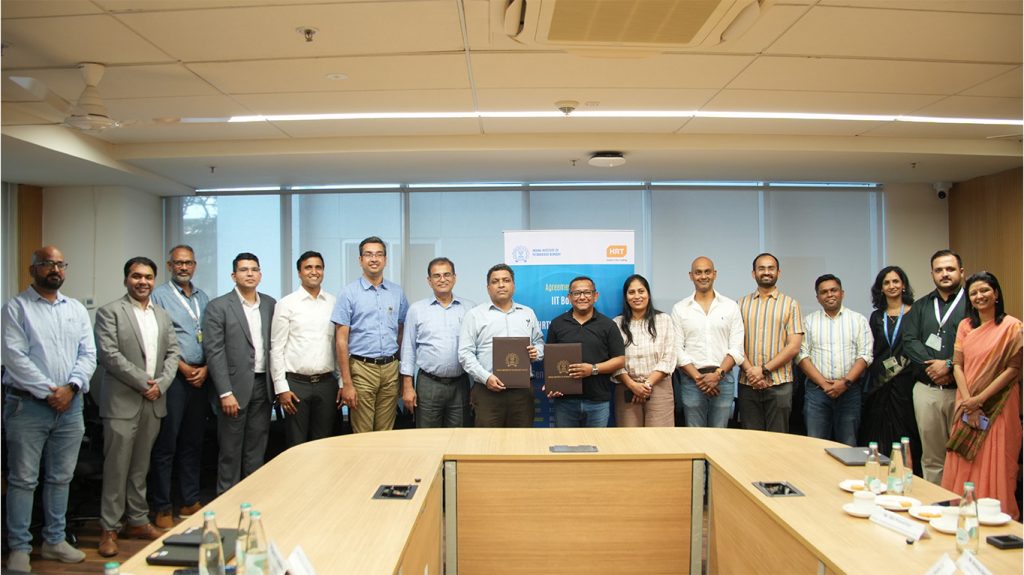
Through a strategic industry partnership with HRTI Private Limited, the IITB–HRTI Centre of Excellence in Vision, Multimodal AI, and Geo-Intelligence (VIMAGE) is pioneering indigenous computer vision systems engineered for real-world impact. The mission is both bold and essential: build open-source, reliable technologies that reduce reliance on imported vision frameworks and democratise advanced perception tools for sectors across the nation.
In its inaugural year, the Centre has transformed ambition into tangible milestones. A standout breakthrough is GeoMeld, a massive, first-of-its-kind dataset containing 2.5 million samples that seamlessly fuses satellite imagery, radar data, and land metrics. To be presented in CVPR 2026 workshop MORSE, GeoMeld has been made entirely open-access to fuel global and domestic research.
Bridging Research & Policy
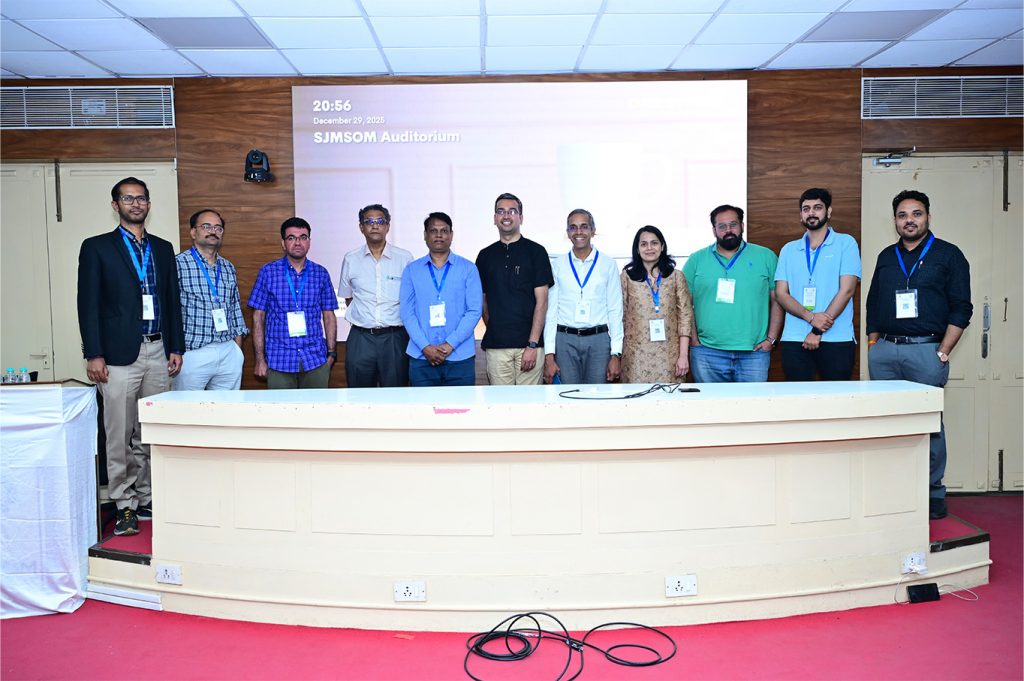
Beyond core research, VIMAGE is actively anchoring India’s AI ecosystem. Its first national workshop on Recent Trends in Computer Vision Technologies drew more than 160 innovators, researchers, and policymakers from across the country, sparking vital collaborations between academia, industry, and government.
The Centre’s research pipeline spans high-stakes domains, from multimodal perception models combining diverse visual streams, to specialized geo intelligence tools designed for climate resilience and precision agriculture. Crucially, the team is also developing “uncertainty-aware” AI systems to ensure safety, precision, and trustworthiness in critical fields like medical imaging and satellite monitoring.
As VIMAGE scales, its projected blueprint for national impact is massive:
– Empowering the Ecosystem: Open source vision models are slated to enable startups, healthcare providers, and public agencies to deploy cutting edge tools without proprietary barriers.
– Geospatial Intelligence: The Centre’s mapping and analytical frameworks have the potential to support large scale applications across crop monitoring, disaster management, and urban planning.
– Cultivating Talent: Comprehensive training initiatives aim to graduate and upskill specialised researchers and engineering practitioners, feeding India’s rapidly growing AI talent pipeline.
What truly sets this initiative apart is its core intent. By tying open-access academic excellence directly to industry vetted applications, VIMAGE ensures that technology is never built in isolation.
It is this exact blend of scientific ambition and national relevance that defines IIT Bombay’s approach. The future of AI isn’t just being imagined here, it is actively being built to see, understand, and serve India.


